Boiling and steaming
Boiled and steamed potatoes are the baseline against which other methods are measured. Nothing is added, so the energy and fat values are those of the raw potato adjusted for water uptake. The losses are of water-soluble nutrients, chiefly vitamin C and potassium, which leach into the cooking water. Leaving the skin on limits the loss; so does using the minimum water and not overcooking. Steaming leaches less than boiling because the potato is not immersed. Mashing does not change the composition, but adding butter, cream or full-fat milk does, and mash bought ready-made often carries added salt as well.
Baking and microwaving
A baked jacket potato loses little to leaching because no water is involved, and the skin is retained and eaten, which keeps the fibre. The interior of a baked potato does not exceed the temperature of boiling water, so acrylamide is not a concern in the flesh; the skin can brown and darken with long baking, and the FSA advice on colour below applies to it. Microwaving is faster and, because it is short, tends to retain more vitamin C than boiling. Toppings, not the cooking, decide the fat content of the finished dish.
Roasting and frying
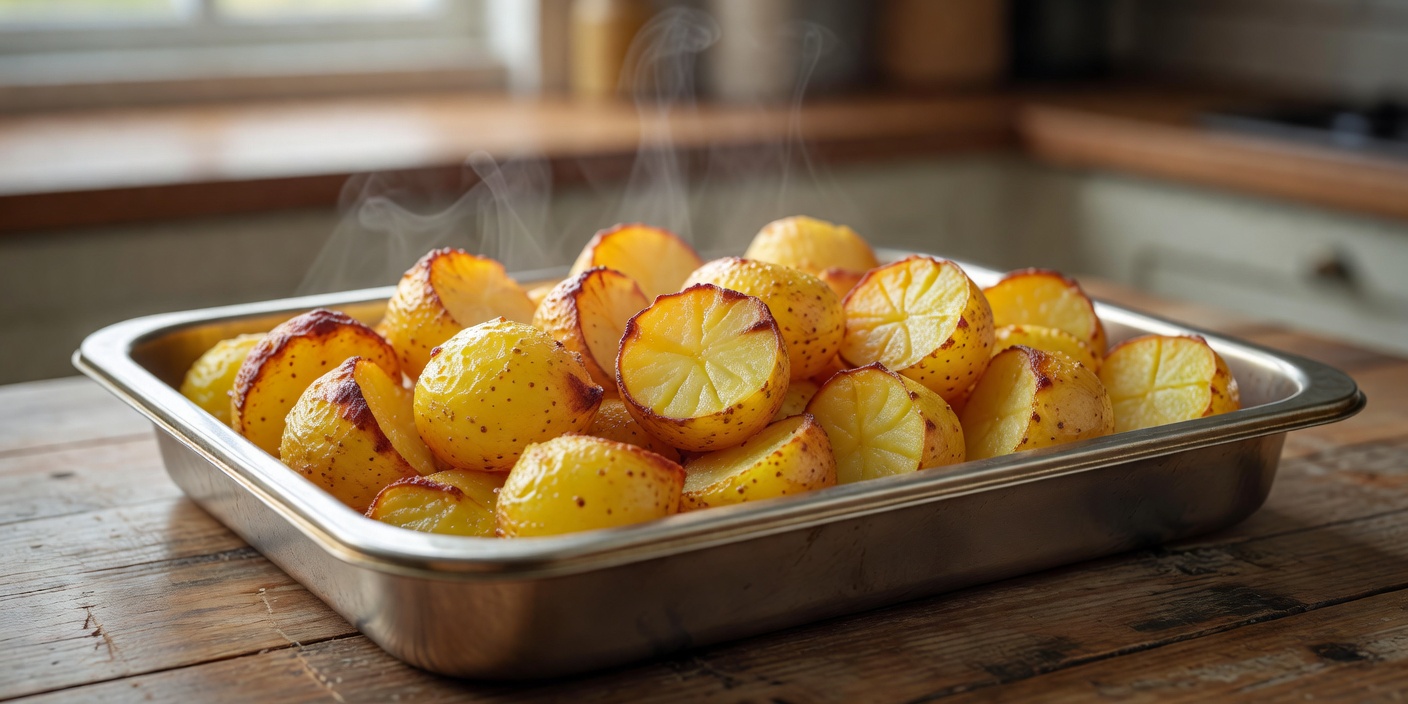
Roast potatoes, chips and sautéed potatoes take up fat from the pan or fryer. The amount depends on the surface area exposed, the temperature and the time: thin-cut chips absorb more per gram than thick-cut ones, and crisps absorb most of all because they are sliced thin and fried until dry. The type of fat matters for the fatty acid profile; the Eatwell Guide advises unsaturated oils such as rapeseed and olive oil over butter, lard or dripping. The energy difference between a boiled potato and the same weight of chips is substantial and comes almost entirely from the oil.
Acrylamide
Acrylamide forms when starchy foods are cooked at high temperatures, generally above about 120°C, by a reaction between the amino acid asparagine and reducing sugars during browning. It is found in roast potatoes, chips, crisps, toast, biscuits and coffee. The Food Standards Agency, following the European Food Safety Authority's assessment that acrylamide may increase cancer risk, ran a public campaign on the subject and continues to publish advice. Its main points are to aim for a golden yellow colour or lighter when frying, roasting, baking or toasting starchy foods; to follow the cooking instructions on packets of oven chips and similar products; and to eat a varied, balanced diet. The FSA also monitors acrylamide levels in commercial products and works with manufacturers on reduction.
Potatoes with a higher sugar content brown faster and form more acrylamide. Sugar content rises when potatoes are stored in the cold, which is why storage advice and acrylamide advice are linked. The varieties report covers storage.
Glycaemic index
The glycaemic index (GI) ranks carbohydrate foods by how quickly they raise blood glucose compared with a reference. Potatoes are generally classed as high GI, but the range across varieties and cooking methods is wide. The international GI database maintained by the University of Sydney lists boiled, baked, mashed and fried potatoes separately because they differ. In general terms, mashed potato ranks higher than whole boiled potato because the starch is more accessible; waxy varieties rank lower than floury ones; and potatoes eaten cold or reheated rank lower than freshly cooked ones. Eating potatoes as part of a meal with protein, fat and vegetables lowers the glycaemic load of the meal as a whole, which is how most people eat them.
People managing diabetes are advised by Diabetes UK to consider portion size and the whole meal rather than to exclude potatoes, and to take individual advice from their care team.
Cooling and resistant starch
When cooked potato cools, some of the gelatinised starch recrystallises into a form that resists digestion in the small intestine. This resistant starch reaches the large intestine, where it is fermented by gut bacteria in a way that resembles fibre. The effect is established in food science and is the reason potato salad and cold boiled potatoes produce a lower glycaemic response than the same potatoes eaten hot. Reheating reverses only part of it. The quantities involved are modest and depend on the variety and how thoroughly the potato was cooked.
Salt
Plain potatoes are low in sodium. Salt arrives with the cook, or with the manufacturer in the case of crisps, oven chips, ready-made mash and takeaway chips. The NHS advises adults to eat no more than 6 g of salt a day, and crisps and chips contribute to intakes above that in the UK. Salting potatoes at the table rather than in the water gives the cook more control.
Summary
| Method | Fat added | Acrylamide | Notes |
|---|---|---|---|
| Boiling | None | None | Vitamin C and potassium leach into water; skin on limits loss |
| Steaming | None | None | Less leaching than boiling |
| Baking | None | Skin only, with long cooking | Skin eaten; toppings decide fat |
| Roasting | Moderate | Forms at browning | Aim for golden yellow; use unsaturated oil |
| Frying | High, more with thin cuts | Forms at browning | Crisps sit outside the Eatwell plate |
| Cooling after cooking | None | None | Raises resistant starch; lowers GI |