Energy and macronutrients
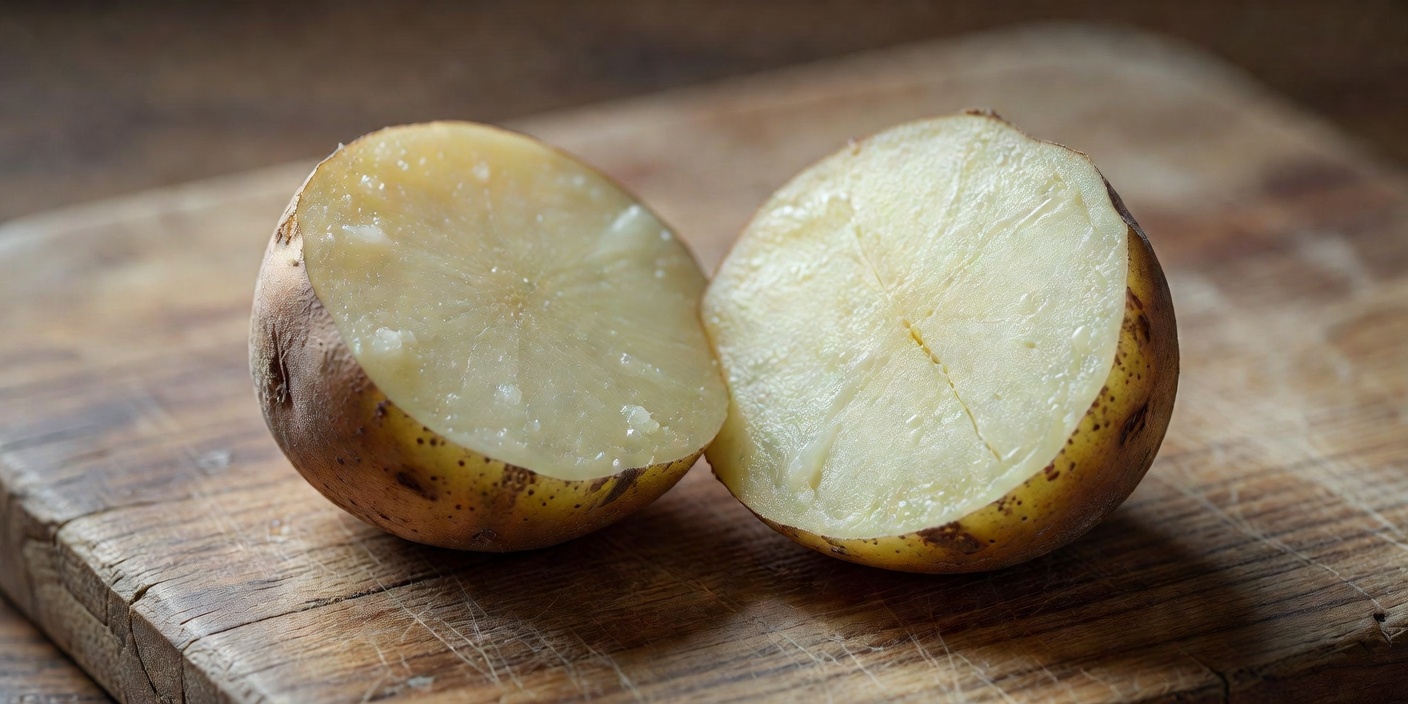
Boiled potato, flesh only, is listed in the UK composition tables at well under 100 kilocalories per 100 g. That is lower than cooked rice or pasta by weight, because roughly three quarters of a boiled potato is water. Almost all of the energy comes from carbohydrate, and almost all of that carbohydrate is starch rather than sugar. Protein is present in a small amount and is of reasonable quality for a plant food, but a potato is not a protein source in the sense that pulses, eggs, dairy or meat are. Fat in an unprocessed potato is close to zero; any fat in the finished dish arrives with the cooking method, which is why the cooking methods report treats fat separately.
The exact energy value of a serving depends on the variety, the season, how long the tuber has been stored and how it was cooked. Anyone who needs a precise figure for a specific product should read the label or consult the current edition of the composition tables, which are published for the UK by Public Health England and are available online.
Potassium
Potassium is the mineral for which potatoes are most often cited. The UK Reference Nutrient Intake for potassium for adults is 3,500 mg a day, a value set by the Committee on Medical Aspects of Food Policy in its Dietary Reference Values and carried forward by the Scientific Advisory Committee on Nutrition. A medium potato supplies a meaningful share of that figure, and because potatoes are eaten in large amounts across the population, the National Diet and Nutrition Survey has consistently listed potatoes and potato products among the food groups contributing to potassium intake in the UK.
Potassium is soluble, so some is lost into cooking water when potatoes are boiled peeled and the water is discarded. Baking, steaming and boiling in the skin retain more.
Anyone advised by a clinician to restrict potassium, for example because of chronic kidney disease, should follow that advice rather than general population guidance. Potatoes are commonly named on low-potassium diet sheets for that reason.
Vitamin C
The UK Reference Nutrient Intake for vitamin C for adults is 40 mg a day. Potatoes contain vitamin C, and historically they were a significant source of it in northern European diets where fresh fruit was seasonal. The amount falls during storage and is reduced further by cooking, since the vitamin is water-soluble and sensitive to heat. Freshly harvested potatoes carry more than tubers that have spent months in a store; boiled potatoes retain less than baked or microwaved ones. Fruit and vegetables remain the main sources of vitamin C in the diet, but potatoes contribute because of the quantity eaten.
Vitamin B6, folate and other micronutrients
Potatoes provide vitamin B6 in useful amounts and a smaller quantity of folate, along with magnesium, phosphorus and some iron. They are a poor source of calcium, and because they contain almost no fat they carry very little of the fat-soluble vitamins A, D, E and K. Potatoes with coloured flesh, such as purple varieties, contain anthocyanin pigments, but the evidence on what that means for health in practice is not settled and the varieties report treats it cautiously.
Fibre and resistant starch
The NHS recommends that adults eat 30 g of fibre a day, and reports that most people in the UK eat less than that. Potatoes contribute fibre, and the contribution is larger when the skin is eaten. Peeling removes a substantial share of it. Potatoes also form resistant starch when cooked and then cooled, which behaves more like fibre than like ordinary starch in the digestive system. Potato salad and reheated boiled potatoes therefore differ slightly from freshly boiled ones in how they are digested.
What a potato lacks
Reporting what a food contains means also stating what it does not. A potato is low in protein per calorie, low in calcium, and contains no vitamin B12 or vitamin D. It does not contain the omega-3 fatty acids found in oily fish or the range of phytochemicals found in a mixed selection of vegetables. That is why dietary guidance treats it as a staple to be eaten alongside other food groups, not as a complete food.
Summary table
| Nutrient | Position in a plain potato | UK reference | Where to check |
|---|---|---|---|
| Energy | Low per 100 g boiled; higher when fried or roasted | Varies with individual need | McCance and Widdowson |
| Potassium | Notable contributor | RNI 3,500 mg a day for adults | COMA Dietary Reference Values; SACN |
| Vitamin C | Present; falls in storage and boiling | RNI 40 mg a day for adults | COMA Dietary Reference Values |
| Fibre | Present; more with skin | 30 g a day for adults | NHS; SACN carbohydrates report |
| Fat | Negligible before cooking | Not applicable | McCance and Widdowson |
The composition tables and the Dietary Reference Values are the sources to consult for exact numbers. This page gives direction and magnitude; it does not replace a label or a dietitian.