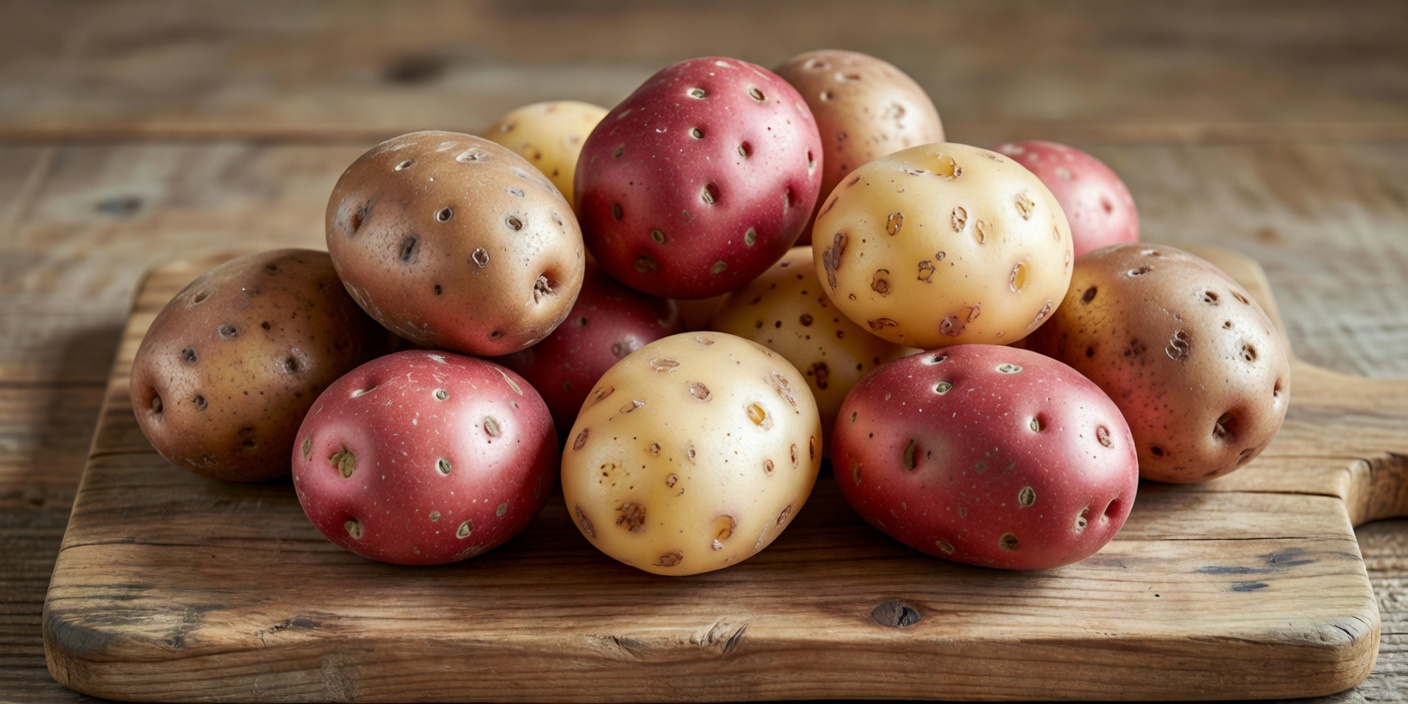
Floury and waxy
The distinction comes down to dry matter. Floury potatoes have a higher starch content and a lower water content; when cooked, the starch granules swell and separate, giving a dry, fluffy texture that breaks up in water and absorbs fat well. Waxy potatoes have more water and less starch; their cells hold together when cooked, so they slice cleanly and stay firm in salads and stews. Most supermarket labelling in the UK now describes potatoes by use, such as "for roasting" or "salad potatoes", which maps onto this distinction. Nutritionally, the difference between a floury and a waxy potato of the same weight is small compared with the difference made by cooking method.
Named varieties
- Maris Piper. Bred in the UK and one of the most widely grown varieties in Great Britain for decades. Floury, cream-fleshed, the standard choice for chips and roast potatoes.
- King Edward. A long-established British variety with a pale skin blushed pink. Floury; favoured for roasting and mash.
- Desiree. Red-skinned with yellow flesh, developed in the Netherlands. An all-rounder that holds its shape reasonably well but also mashes.
- Charlotte. A French salad variety, long and yellow-fleshed, waxy and firm. Sold as a salad potato and usually eaten skin-on.
- Jersey Royal. A new potato grown in Jersey and holding Protected Designation of Origin status, so only tubers grown on the island may carry the name. Waxy, thin-skinned, harvested early in the year.
- Rooster. An Irish red-skinned variety bred at Teagasc, the Irish agriculture and food development authority. Widely sold in Ireland and Northern Ireland; fairly floury.
- Marfona. A Dutch variety with a smooth pale skin, commonly sold in the UK as a baking potato.
- Pink Fir Apple. A knobbly heritage salad variety with a nutty flavour, waxy and eaten skin-on.
New potatoes and maincrop
"New" describes a stage of harvest, not a variety. New potatoes are lifted before the plant has died back and before the skin has set, so the skin is thin and rubs off easily. They have a higher water content, taste sweeter and are almost always waxy in behaviour. Maincrop potatoes are left in the ground to mature and are then stored, sometimes for many months, which is why the same variety can taste different at different points in the year. Vitamin C content is higher in freshly harvested potatoes and falls in storage, a point covered in the nutrients report.
Coloured flesh
Purple and blue-fleshed varieties contain anthocyanins, the same class of pigment found in blueberries and red cabbage. Yellow-fleshed varieties contain more carotenoids than white-fleshed ones. Both are of research interest, but the health significance of the amounts in a normal serving is not established and no national dietary guidance treats coloured potatoes differently from others. They are a matter of taste and appearance.
Choosing and storing
When buying, choose potatoes that are firm, with no soft patches, no green areas and no sprouting eyes. Loose potatoes let a buyer inspect each one; bagged potatoes are usually cheaper per kilogram but should be checked through the packaging. Once home, keep them somewhere cool, dark and dry, out of the light and out of plastic bags that trap moisture. Light causes greening; warmth encourages sprouting; damp encourages rot. The Food Standards Agency publishes household storage advice and has revised its position on refrigeration over time, so its current page is the place to check rather than older guidance.
Green patches and sprouts contain elevated levels of glycoalkaloids, mainly solanine and chaconine, which taste bitter and can cause stomach upset in quantity. The Food Standards Agency advises cutting away green parts and sprouts and discarding potatoes that are extensively green or taste bitter.
Organic, conventional and home-grown
No established nutritional difference separates organic from conventionally grown potatoes of the same variety. Pesticide residues in food sold in the UK are monitored by the Expert Committee on Pesticide Residues in Food, which publishes its results, and potatoes are among the crops it tests routinely. Home growers buy certified seed potatoes rather than planting shop-bought tubers, and choose between first earlies, second earlies and maincrop according to when they want to harvest. The Royal Horticultural Society publishes growing guidance for each group.